
How to Clean Modular Switch Plates, Finish by Finish
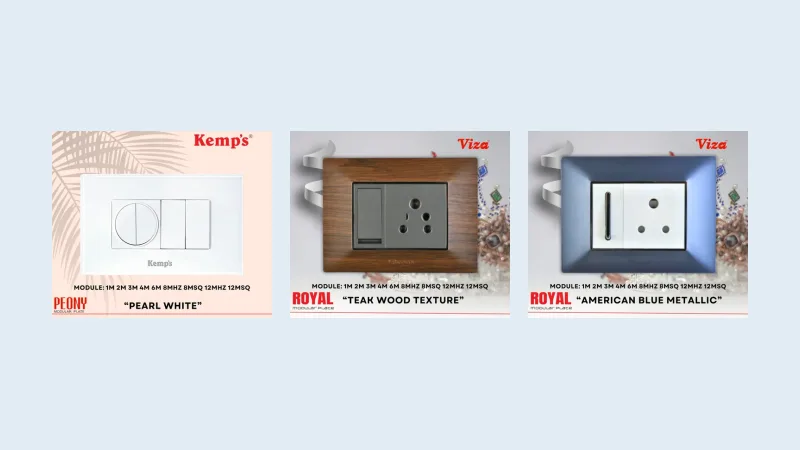
If you want to know how to clean a switch board without damaging it, the short answer is: switch off at the MCB, use a lightly damp cloth with mild soap, never spray anything onto the plate, and dry it before switching back on. The details change with the finish. Metallic, wood texture, glass-style and Cristal acrylic, chrome and gloss white plates each have one or two things to avoid. This guide takes them one by one, and explains what to do about a yellow switch board.
Key takeaways
- Switch off at the MCB or main first. Spray onto the cloth, never onto the switch or socket.
- Mild soap and a lightly damp microfibre cloth is safe on every modular plate finish. Dry fully before power goes back on.
- No solvents, acetone, abrasive powders or steel wool — and no glass cleaner on glass-style or Cristal acrylic plates.
- A yellowed old plate may not clean back to white. Replacing the front plate is the fix; our plates are UV-protected and do not turn yellow.
What cleaning a switch board actually involves
Knowing how to clean a switch board is mostly knowing what not to do. A modular switch plate is a moulded front cover over live switches and sockets. The dirt on it is ordinary: fingerprints, cooking grease, dust, and in a Mumbai monsoon, a film of damp grime. None of it needs strong chemicals. What damages plates is almost always the cleaning itself — a scouring pad on a glass-style face, acetone on a metallic coat, or a spray bottle aimed straight at a socket.
This guide explains how to clean modular switch plates safely, finish by finish: metallic, wood and stone texture, glass-style and Cristal acrylic, chrome, and solid colours or gloss white. It also covers the question we are asked most often — how to clean a yellow switch board — and when cleaning simply cannot fix it. We make plates at our works in Andheri East, Mumbai, so the advice is based on how those surfaces are built.
Before you start: switch off and keep it dry
Every method in this guide starts the same way. The plate may be plastic, but directly behind it are live terminals, and water or cleaner that runs into a switch or socket can cause a short or a shock.
Step 1 Switch off the circuit at the MCB or the main switch on your distribution board. Switching off the individual switch on the plate is not enough.
Step 2 Never spray any liquid onto or into a switch or socket. Spray onto the cloth instead, then wipe.
Step 3 Keep the cloth only lightly damp — wrung out until no drop falls. A wet cloth is how water gets into a socket shutter.
Step 4 Dry the plate with a second, dry cloth and let it dry fully before switching the power back on.
Cloth A soft microfibre cloth is ideal. Tools A soft, dry toothbrush or cotton bud for the gaps around rockers.
Switch off at the MCB or main first, every time. Never spray cleaner onto a switch or socket, never use a dripping cloth, and never clean a plate that is cracked, scorched or warm — that is a job for a licensed electrician.
| Finish | Our examples | Clean with | Avoid |
|---|---|---|---|
| Metallic | Olympic Blue Metallic, Rose Gold Metallic | Lightly damp soapy cloth, wipe in one direction | Metal polish, acetone, gritty creams |
| Wood and stone texture | Walnut, Teak, Rey Wood, Mine Stone | Dry soft brush, then damp cloth along the grain | Furniture polish, wax, oils, hard brushes |
| Glass-style and Cristal acrylic | Peony, Glasso, Cristal | Microfibre, plain water or mild soap, buff dry | Ammonia or alcohol glass cleaner, solvents, paper towel |
| Chrome trim | VIZA Cherry White Chrome | Damp soapy cloth, buff trim dry at once | Chrome polish, steel wool, scouring pads |
| Gloss white and solid colours | Pearl White, Z Black, Sky Blue | Basic method; soft eraser for pen marks | Abrasive powders, melamine sponges |
The safe basic method that works on every finish
For routine cleaning, this one method is safe on every plate finish we make. Only the stubborn marks need anything more.
1. Dust Wipe the plate with a dry microfibre cloth to lift loose dust, so you are not rubbing grit into the surface.
2. Gaps Brush out the edges of rockers and socket openings with a dry soft brush. Do not push anything into the socket holes.
3. Wipe Put a few drops of mild dishwashing liquid in a bowl of water, dip the cloth, wring it out hard, and wipe the plate with light strokes.
4. Rinse Wipe again with a cloth dampened in plain water to remove soap residue, which otherwise attracts dust.
5. Dry Dry with a clean cloth, wait until the plate and its edges are completely dry, then switch the power back on.
For most homes, a dry dust once a week and this damp wipe once a month is enough to keep a switch board looking new. Kitchen boards may need it more often because of grease.
Switch off at the MCB or main before you touch the plate with a damp cloth.
Never spray liquid onto or into a switch or socket; keep the cloth only lightly damp.
No solvents, acetone, abrasive powders or steel wool on any finish.
Old non-UV plates may not clean back to white; a new plate is the fix.
Which finishes show marks fastest
All our plate finishes clean the same basic way, but they do not get dirty at the same pace. Flat, reflective faces show every thumbprint; textured faces hide them.
How often each finish tends to need a wipe — a guide, not measured data
A qualitative ranking written by us from how visibly each surface shows fingerprints. The bars show how often marks become noticeable, not any tested value.
Glossy and reflective Glass-style, Cristal and chrome show marks first. Textured Wood and stone effects hide them longest. For a detailed look at each finish, see our plate finishes compared guide.
If fingerprints bother you on a busy board, such as beside the main door or a kitchen counter, a wood or stone texture plate needs the least wiping.
How to clean metallic switch plates
Our metallic plates — such as Olympic Blue MetallicRose Gold Metallic and K Grey Metallic — have a coloured, shimmering coat over a moulded base. That coat is what you are protecting.
Do Use the basic method: dry dust, then a lightly damp cloth with mild soap, then dry. Wipe in one direction rather than scrubbing in circles, which keeps the sheen even.
Avoid Metal polish, acetone, nail-polish remover, thinners and any cream cleaner with grit. They are made for real metal and can dull or strip a metallic coat.
Browse the range on our texture and metallic plates page, or see VIZA Olympic Blue Metallic and KEMPS Rose Gold Metallic.
If a metallic plate still looks cloudy after cleaning, it is usually soap residue. Wipe once more with a cloth dampened in plain water and dry it straight away.
How to clean wood and stone texture plates
Our wood-finish plates are moulded and printed to look like timber, not made of solid wood, so they need no oil or polish. Examples are Walnut Wood TextureTeak Wood TextureRey Wood and the stone-style Mine Stone.
Do Brush the grain with a dry, soft toothbrush first — dust sits in the texture. Then wipe along the grain with a lightly damp soapy cloth, and dry.
Avoid Furniture polish, wax and wood oils. They leave a sticky film that holds dust and can darken the print unevenly. Avoid hard brushes as well.
A wood-texture plate: brush the grain dry before any damp wipe

VIZA Royal in Teak Wood Texture. See the product page and the V-Wood plates.
How to clean glass-style and Cristal acrylic plates
This is the finish that needs the gentlest hand. Peony and Glasso have a glass-style face, and Cristal is made of acrylic and polycarbonate. All three have a deep, flat, glossy surface that shows both fingerprints and scratches.
Do Use a clean microfibre cloth only, lightly damp with plain water or a drop of mild soap. Wipe with light pressure and buff dry for a streak-free finish.
Never Use glass cleaner containing ammonia or alcohol, acetone, or a paper towel scrubbed hard. Acrylic is not glass; solvents can cloud or craze it, and rough paper can leave fine scratches.
Tip Rinse the cloth often. A cloth that has picked up grit acts like sandpaper on a glossy face.
See Cristal, Glasso and Peony.
Do not use a “glass cleaner” on a glass-style or Cristal plate just because it looks like glass. Mild soap and water is the safe choice.
How to clean chrome and bright-trim plates
Our White Chrome plates in the VIZA Cherry design pair a white body with a bright chrome-look trim. That bright trim is a coating, not solid metal.
Do Wipe with a lightly damp soapy cloth, then buff the trim with a dry microfibre cloth to bring back its shine and remove water spots.
Avoid Chrome polish, metal cleaners, steel wool and scouring pads. On a coated trim, they wear through the bright layer.
Watch Water spots show quickly on chrome. Dry it immediately rather than letting it air-dry.
See VIZA White Chrome and the Cherry plates.
Once the chrome trim has worn through to the base, no polish will bring it back. Replacing the front plate is the only fix.
How to clean gloss white and solid colour plates
Gloss white and solid colours such as Pearl WhiteZ BlackSky Blue and Mint Green are the easiest plates to look after. Our plates carry an anti-scratch coating, and a smooth, even face wipes clean quickly.
Do Use the basic method. For kitchen grease, let a soapy cloth rest on the mark for a few seconds, then wipe. For pen or crayon marks, a soft eraser used lightly often lifts them.
Avoid Abrasive powders, scouring pads and “magic” melamine sponges. They take the gloss off and leave a dull patch that holds dirt faster.
Dark colours Z Black and other dark shades show dust and soap streaks more, so finish with a dry buff. See Royal and Slim for our widest colour choice.
Gloss white is the most forgiving finish to clean and the easiest to match if you replace one plate years later.
How to clean a yellow switch board
Many people searching for how to clean a yellow switch board are really asking whether an old white board can be made white again. The honest answer is: sometimes a little, often not.
Surface dirt If the yellow is grime, grease or smoke residue on top of the plate, the basic soapy wipe will lift some or all of it.
Yellowed plastic If the plastic itself has turned yellow — common on older plates without UV protection, especially near windows — the colour is in the material. Cleaning may not reverse it, and bleach or harsh chemicals risk damaging the plate and are not safe near live fittings.
The fix Replace the front plate. On a modular board, a new plate can often be fitted over the existing switches by an electrician. Our plates are UV-protected and do not turn yellow.
Replacing a yellowed plate is usually quicker and safer than trying to bleach it. Our modular plates are UV-protected, so they do not yellow, and carry a 5-year warranty.
What never to use on a switch plate
Common cleaners, from safest to most damaging on switch plates — a guide
Our guidance for plastic, acrylic and coated plate finishes. Bar length shows how safe each option is to use, not a measured value.
Never Spray bottles aimed at the plate, bleach, acetone, thinners, steel wool, abrasive powders or a dripping cloth. Always Power off, a lightly damp cloth, and a full dry.
If cleaning reveals scorch marks, melting, cracks or a plate that feels warm, stop. Read switch getting hot or socket sparking and call a licensed electrician.
When to replace a plate instead of cleaning it
Cleaning restores dirty plates, not damaged ones. Replace the front plate when you see:
Cracks or chips which can expose parts behind the plate. Scorch or brown marks which point to a wiring fault — get it checked before anything else. Yellowing that survives a proper clean. Deep scratches or a dull patch from past scrubbing.
Same switches Replacing the plate changes only the front. Browse our plates and switches or ask for help on the enquiry page.
Scorch marks or a warm plate are a wiring warning, not a cleaning problem. Switch off at the MCB and call a licensed electrician before replacing anything.
FAQs
How do I clean a switch board safely?
How do I clean modular switch plates without scratching them?
How do I clean a yellow switch board?
Can I use sanitiser or glass cleaner on switch plates?
Do I need to switch off the power to clean switches?
How often should I clean switch plates?
Why buyers choose Vinayak Electricals
- Made at our own works in Andheri East, Mumbai — our only manufacturing site.
- ISO 9001:2015 certified manufacturing process.
- UV-protected plates that do not turn yellow.
- Anti-scratch coating that stands up to everyday wiping.
- 5-year warranty on our modular plates.
- 2000+ products, from plates and switches to sockets and accessories.
Replace a tired plate, keep the switches
See our metallic, wood-texture, glass-style, Cristal and gloss white plates, or ask us to point you to a dealer.
Browse plates and switches