How to calculate your electricity bill from units and meter reading
How to calculate electricity bill at home comes down to one formula and one subtraction: units are watts × hours ÷ 1,000, and the units you are billed for are your current meter reading minus the previous one. Below we show how to read the meter, how a typical Indian bill is built from slabs, fixed charge, fuel adjustment and duty, and a fully worked example with a made-up tariff, then how to estimate your own units from your appliances. We make switches, regulators, irons and LED lights in Mumbai, not meters, so every tariff here is an example.
Key takeaways
- 1 unit = 1 kWh — a 1,000 W load for one hour. Units = watts × hours ÷ 1000.
- Meter — current kWh reading minus the previous one on your last bill = units used.
- Bill — slab energy charges + fixed charge + fuel adjustment + electricity duty, plus any other items your board lists.
- Worked example — 359 units at our made-up tariff come to ₹2,992.10, about ₹8.33 a unit on average.
- ⚠ Tariffs differ — by state and by year. Use the slab rates printed on your own bill.
How to calculate electricity bill: the short answer
To calculate your electricity bill, find the units you used, which is the current meter reading minus the previous one, then price those units at your board’s slab rates and add the fixed charge, fuel adjustment and electricity duty printed on the bill; one unit is one kilowatt-hour, a 1,000-watt load running for one hour.
That is the whole method. The rest of this guide takes each step slowly: what a unit is, how to read the meter, what each line of a typical Indian bill means, and a fully worked example from meter reading to rupees. It ends with how to estimate a month’s units from the appliances in your home, and what a smart meter changes.
One warning before the sums. Tariffs are set by each state’s electricity regulator, differ between boards and change most years. Every rate in this guide is a made-up example to show the arithmetic. For your own bill, use the slab rates printed on it or on your board’s website.
What is one unit of electricity?
One unit of electricity is one kilowatt-hour (kWh): the energy used by a 1,000-watt appliance running for one hour, or a 100-watt appliance running for ten hours, and it is the only quantity your meter counts and your bill charges for, whatever the appliance and whatever time of day you used it.
Two words get mixed up here. Watt (W) is the rate at which an appliance uses power, printed on its rating plate. Kilowatt-hour (kWh) is the amount used over time, and that is the unit on your bill. A watt is like speed; a unit is like distance travelled.
So 1 unit = 1 kWh = 1,000 Wh. A 1000 W iron heating for one hour uses one unit. A 9 W LED lamp, such as our 1065 LED lamp (₹70 MRP), needs about 111 hours to use one unit. A ceiling fan drawing a typical 75 W needs about 13 hours.
Watts tell you how hard an appliance pulls; hours tell you for how long. You need both to get units.
| Part of the bill | Made-up example rate | For 359 units |
|---|---|---|
| Energy, units 1 to 100 | ₹4.00 a unit | ₹400.00 |
| Energy, units 101 to 300 | ₹7.00 a unit | ₹1,400.00 |
| Energy, units 301 to 500 | ₹10.00 a unit | ₹590.00 (59 units) |
| Energy, above 500 units | ₹12.00 a unit | ₹0.00 |
| Fixed charge | ₹100 a month | ₹100.00 |
| Fuel adjustment | ₹0.40 a unit | ₹143.60 |
| Electricity duty | 15% of energy charges | ₹358.50 |
| Total | ₹2,992.10 |
Electricity bill calculation formula
The electricity bill calculation formula has two halves: units equal watts multiplied by hours of use and divided by 1,000, and the bill equals those units priced at the slab rates, plus the fixed charge, the fuel adjustment and the electricity duty, with any other charges your board lists added on top.
Units = W × hours ÷ 1000 works for one appliance. For the whole house, the meter does the adding for you.
A worked line: a 2,000 W geyser for 30 minutes a day is 2,000 × 0.5 ÷ 1,000 = 1 unit a day, or 30 units a month. At an example rate of ₹8 a unit, that is about ₹240 a month. The ₹8 is not your tariff; it is the round example figure we use across our guides.
The second half, pricing the units, is where people go wrong. Most boards charge more per unit as the month’s total climbs, so the same 30 units can cost more in a heavy month than a light one. The worked example below shows why.
Write the formula once on the back of a bill: W × h ÷ 1000 = units. Every estimate in this guide is that line repeated.
Current reading minus previous reading, counted in kWh.
Each block of units is charged at its own rate, rising as use rises.
A monthly amount for the connection, paid even at zero units.
Electricity duty and fuel adjustment are added on top of energy charges.
How to calculate electricity bill from meter reading
To calculate your electricity bill from meter reading, note the kWh reading on the meter today, subtract the previous reading printed on your last bill, and the difference is the units you have used since then; for a household meter that figure goes straight into the slab calculation, unless the bill shows a multiplying factor above one.
Electric meter reading: two readings give the units
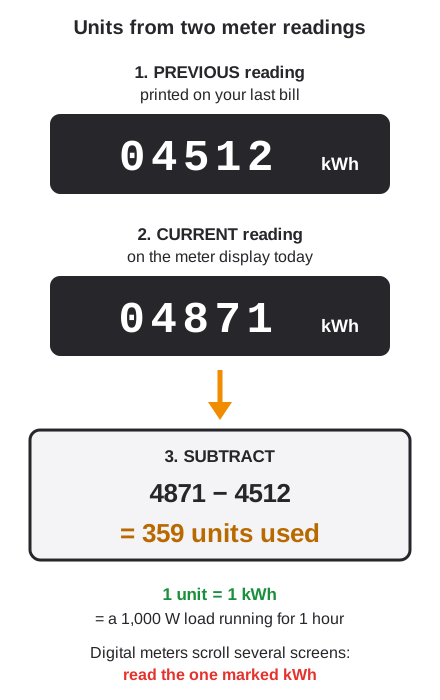
Drawn by us. The readings are an example. Digital meters cycle through several screens; use the one marked kWh. Tap the diagram to open it full size.
Step by step: Previous 4,512 from the last bill, Current 4,871 read today, and 4,871 − 4,512 = 359 units.
Your bill prints both readings and the units, so you can check the board’s figure against the meter. Look for the reading type too: “actual” means the meter was read; “average” or “estimated” means it was not, and the next actual reading will settle the difference.
Some bills show an MF or multiplying factor. Units are then the difference multiplied by that factor; on most household meters it is 1.
Electric meter reading units: what the display shows
An electric meter shows units as a running total in kWh that only ever goes up, so the number on the display is not this month’s use but everything the meter has counted since it was fitted; a digital meter also scrolls through other screens, such as date, time, voltage or kVAh, which are not your billed units.
On an older electromechanical meter the units are a row of number wheels, read left to right; ignore any wheel set apart in a different colour, which is a fraction. On a digital (static) meter wait for the screen that ends in kWh and write down the whole number.
The meter face also prints a constant such as 3200 imp/kWh, meaning its test lamp blinks that many times per unit. The lamp blinks faster when more load is on: switch on a geyser and watch it speed up. That is a quick, rough way to see which appliances pull hardest.
The meter, its seal and the cable up to it belong to the electricity board. Read it; never open it, cut a seal or touch the wiring around it. A meter you think is faulty is reported to the board, which tests it.
How is a typical Indian electricity bill built?
A typical Indian electricity bill is built from four main parts: energy charges for the units used, priced in slabs; a fixed or demand charge per month or per kilowatt of sanctioned load; a fuel or power purchase adjustment per unit; and electricity duty, a state levy, with any arrears, rebates or subsidy shown below them.
Energy charges The units multiplied by the slab rates. This is usually the largest line.
Fixed charge A monthly amount for keeping the connection, charged even if you use nothing. Some boards set it per connection, others per kW of sanctioned load, the load your connection is approved for. That load also sizes your main switch; our which MCB for home guide explains the incomer.
Fuel adjustment A per-unit amount that passes changes in the cost of fuel and bought-in power on to consumers. Names vary: FAC, FPPCA or similar. It can go up or down between bills.
Electricity duty A state levy, often a percentage of energy charges or a rate per unit. Some boards add a wheeling or network charge per unit, meter rent or other items. Your bill lists each one by name.
Boards differ in names, order and what they include. Read the line items on your own bill; ours is a general picture, not any board’s format.
Electricity bill calculation per unit: how slabs work
Electricity bill calculation per unit is done in slabs: the first block of units each month is charged at the lowest rate, the next block at a higher rate, and so on, so each unit is priced by the slab it falls in and the last units of a heavy month cost the most.
Using the example tariff in the table above, the first 100 units cost ₹4.00 each, units 101 to 300 cost ₹7.00, units 301 to 500 cost ₹10.00, and anything above 500 costs ₹12.00.
Two numbers come out of this. The average rate is the total bill divided by the units. The rate on the next unit is what one more unit costs: the top slab’s rate plus the per-unit charges and duty on it. In a heavy month the second is well above the first, which is why cutting the last 50 units saves more than the average suggests.
Some boards bill every two months and set their slabs for that period. Some apply a rate to all units once you cross a limit instead of slab by slab. Your board’s tariff schedule says which method it uses.
Electricity bill calculation formula in India: a worked example
Here is the electricity bill calculation formula in India applied end to end: 359 units, priced at the example slab rates of ₹4, ₹7 and ₹10, give ₹2,390 of energy charges; adding a ₹100 fixed charge, a ₹0.40 per unit fuel adjustment and a 15% duty brings the example bill to ₹2,992.10.
Step 1 Units: 4,871 − 4,512 = 359. Step 2 Slabs: 100 × ₹4 = ₹400; 200 × ₹7 = ₹1,400; 59 × ₹10 = ₹590. Energy charges = ₹2,390. Step 3 Fixed charge: ₹100. Step 4 Fuel adjustment: 359 × ₹0.40 = ₹143.60. Step 5 Duty: 15% of ₹2,390 = ₹358.50. Total ₹2,992.10
Where the example bill goes (example tariff, 359 units)
Worked from the made-up example tariff in this guide, not any board’s rates. Bars to scale against ₹2,390.
The average works out to ₹8.33 a unit. But unit 360 would cost ₹11.90: ₹10 slab rate, ₹0.40 fuel adjustment and ₹1.50 duty. That gap is the slab effect.
How to calculate electricity bill for home from your appliances
To calculate the electricity bill for a home before it arrives, list each appliance with its wattage and daily hours, work out the units for each with watts times hours divided by 1,000, multiply by the days in the billing period, add them up, and then price the total with your board’s slabs.
Our example is a 2BHK in a warm month. The wattages are typical figures, not measurements of any one model; take yours from each rating plate or BEE star label.
Example 2BHK: units in a 30-day month, by appliance
Typical wattages and our example hours, about 359 units in total. The appliance figures are explained in our appliance power consumption chart.
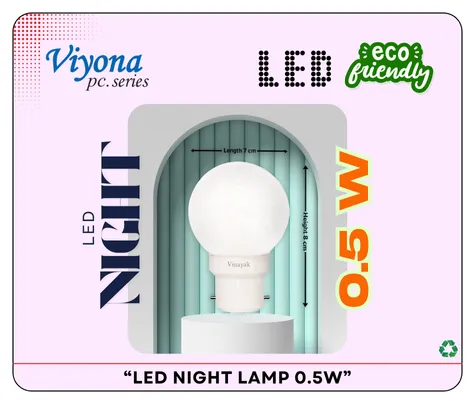
The pattern is common: the AC is the largest single line, the fans come second because they run for many hours, and LED lighting is small. Our LED lamps run from 9 W to 50 W; a 0.5 W LED night lamp (₹40 MRP, code 1061) left on all night uses about 0.15 units a month.
Why doesn’t my estimate match my bill?
An estimate rarely matches the bill exactly because real appliances do not draw their rated watts all the time, the billing period is not always 30 days, devices on standby add units nobody counts, and a bill based on an average or estimated reading can be corrected on the next actual one.
Cycling A fridge, AC, geyser and iron switch their compressor or element on and off to hold temperature, so they use less than watts × hours. Billing days A 33-day period has more units than a 28-day one. Standby A set-top box, TV or charger left on at the wall keeps drawing a little all day.
Plugging the TV corner into one spike guard and switching that off at the wall stops its standby draw; our VIYONA classic ABS spike guard starts at ₹370 MRP for the 291 (1 x 4, 1.5 m cord). Keep heavy loads such as the iron off it.
If the units jump with no change at home, compare two meter readings a week apart with everything you know about. A steady unexplained rise is worth reporting to the board.
Smart meter vs normal meter: what changes?
A smart meter still counts the same kWh units as a normal meter, but it sends its readings to the board over a communication link, so nobody needs to visit, and it can work in prepaid mode, where you recharge in advance and see your balance and daily units in an app or on the display.
A normal meter is read by a meter reader once a billing period, and you pay afterwards. A smart meter is read remotely, often many times a day, which ends estimated bills and lets you see use by the day. In prepaid mode the supply can be cut when the balance runs out, so keep an eye on alerts.
What does not change: 1 unit = 1 kWh, the formula, and the fact that tariffs come from your board. Smart meters are being fitted by many boards in India; the board decides when and which type, and the meter remains its property.
We do not make meters. For anything about your meter, its readings or a smart meter installation, contact your electricity board.
How to bring the units down
To bring the units down, start with what runs longest or pulls hardest: set the AC a little warmer with a timer, switch the geyser off once the water is hot, replace old bulbs and tubes with LEDs, use an electronic fan regulator or a BLDC fan, and switch standby devices off at the wall.
Fans run for many hours, so watts matter; our ceiling fan power consumption guide works out a normal fan against a BLDC fan. An old resistor regulator wastes power as heat at low speed, which the fan guide explains. Our VIYONA fan regulators start at ₹215 MRP for the 137 mini 4 step.
Lighting A 20 W T5 LED tube fitting such as our 1059 (₹200 MRP) is on our LED tube fittings page. Ironing Our VIYONA Diamond 1000 W dry iron (₹920 MRP, code 601) uses at most one unit per hour of heating, so batch the ironing.
More ideas, with the arithmetic, are in our guide to saving electricity at home.
FAQs
How to calculate electricity bill by unit?
Bijli ka bill kaise calculate kare?
1 unit bijli kitne watt ki hoti hai?
What is the electricity bill calculation formula?
How do I read my electric meter?
Is a smart meter bill calculated differently?
Why buyers choose Vinayak Electricals
- Switches, sockets, regulators, MCBs and LED lights made at our own works in Mumbai since 1995.
- LED lamps from 9 W to 50 W and a 0.5 W night lamp, with MRPs published openly.
- VIYONA fan regulators from ₹215 MRP for conventional boards, plus KEMPS and VIZA modular ones.
- VIYONA 1000 W dry irons, codes 601 to 605, from ₹920 MRP.
- Classic ABS spike guards from ₹370 MRP (291), with 1.5 m, 3 m and 5 m cords.
- Sold through dealers across India, in full boxes, with ISO 9001:2015 certification.
LED lights that keep the units low
See watts and MRPs for our LED lamps, tube fittings, panels and night lamps, then order through a dealer or call us.
View LED lights