Appliance power consumption chart: watts and units for Indian homes
This appliance power consumption chart gives the typical watts and units per hour and per day of the appliances in an Indian home, from a 1.5 ton AC and a double door fridge to a geyser, an induction cooktop, a ceiling fan and a 9 W LED lamp. Every range is labelled typical; your rating plate or BEE star label is the real figure. We show the calculator method, how to read the star label, a typical 2BHK day, and which appliances need a 16A socket or their own MCB. Where we quote our own irons and LED lamps, the watts and MRPs come from our catalogue.
Key takeaways
- Units = W × hours ÷ 1000 — the plate gives watts; the bill counts units (kWh).
- Big per hour — geyser 2–3 units, 1.5–2 ton non-inverter AC 1.3–2.3, induction up to 2, iron up to 1.
- Big by hours — fridge 0.4–1.5 units a day, fans 0.6–0.8 each over 10 hours.
- Our products — VIYONA dry irons are 1000 W (₹920 to ₹1,480 MRP); our LED lamps run from 9 W (₹70) to 50 W.
- ⚠ Heavy loads — 16A socket or their own circuit and MCB; never a multi-plug.
Appliance power consumption chart: the short answer
Appliance power consumption is the appliance’s wattage multiplied by the hours it runs and divided by 1,000, which gives units (kWh), the figure on your electricity bill; heating and cooling appliances such as the geyser, AC, induction cooktop and iron use the most per hour, while LED lamps, fans and routers use little.
The chart and table below give typical ranges for common appliances in Indian homes. They are not measurements of any one model. The real figure for yours is on its rating plate, its carton, or the BEE star label, which on many appliances prints the expected units per year.
We make switches, sockets, MCBs, regulators, irons and LED lights at our works in Mumbai. We do not make ACs, fridges, geysers, fans or other large appliances, so where we quote one of our own products, such as our 1000 W irons or our LED lamps, the figure comes from our catalogue; everything else is a typical range.
Appliance power consumption calculator: the method
The appliance power consumption calculator is three steps you can do on a phone: read the watts on the rating plate, multiply by the hours the appliance runs in a day, and divide by 1,000 to get units per day; multiply by 30 for a month and by your tariff for rupees.
Step 1 Watts from the plate, for example a 1,500 W induction cooktop. Step 2 Hours: 30 minutes a day is 0.5. Step 3 1,500 × 0.5 ÷ 1,000 = 0.75 units a day, or 22.5 a month. At an example rate of ₹8 a unit, about ₹180 a month.
Two corrections make the answer more honest. Cycling A fridge, AC, geyser and iron switch on and off to hold temperature, so they use less than watts × hours. Power setting An induction cooktop or microwave on a low setting draws less than its maximum.
Units = W × hours ÷ 1000. If the plate gives amps instead of watts, watts are roughly amps × 230 for a single phase appliance.
| Appliance | Typical watts | Units per hour | Example day |
|---|---|---|---|
| 1.5 ton AC, inverter | Varies with load | 0.8 to 1.3 (average) | 4 h = about 4 units |
| 1.5 ton AC, non-inverter | Varies with load | 1.3 to 1.7 (average) | 4 h = about 6 units |
| Refrigerator, double door | Compressor cycles | Use the label | 0.7 to 1.5 units |
| Refrigerator, single door | Compressor cycles | Use the label | 0.4 to 1 unit |
| Geyser, storage | 2,000 to 3,000 | 2 to 3 while heating | 30 min = 1 to 1.5 |
| Induction cooktop | 1,200 to 2,000 | Up to 1.2 to 2 | 30 min at 1,500 W = 0.75 |
| Microwave oven | 800 to 1,500 | Up to 0.8 to 1.5 | 15 min at 1,200 W = 0.3 |
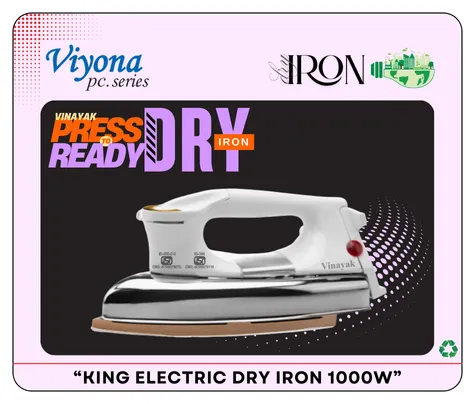
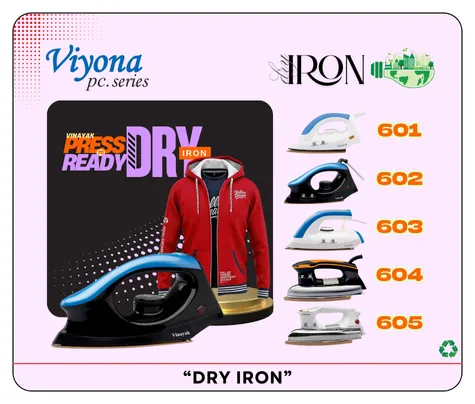
| Iron (VIYONA 601 to 605) | 1,000 | Up to 1 | 15 min = up to 0.25 |
| Washing machine | 300 to 800 (no heater) | 0.3 to 0.8 | One wash = about 0.5 |
| Ceiling fan, normal | 60 to 80 | 0.06 to 0.08 | 10 h = 0.6 to 0.8 |
| Ceiling fan, BLDC | 25 to 35 | 0.025 to 0.035 | 10 h = 0.25 to 0.35 |
| LED TV | 50 to 100 | 0.05 to 0.1 | 4 h = 0.2 to 0.4 |
| Laptop | 30 to 70 | 0.03 to 0.07 | 6 h = 0.18 to 0.42 |
| Wi-Fi router | 5 to 15 | 0.005 to 0.015 | 24 h = 0.12 to 0.36 |
| LED lamp (our 1065) | 9 | 0.009 | 5 h = 0.045 |
Units per hour by appliance: the chart
Per hour of running, a storage geyser typically uses 2 to 3 units, a 1.5 to 2 ton non-inverter AC 1.3 to 2.3 units, an induction cooktop on full up to 2 units and a 1000 W iron at most 1 unit, while a fan uses under a tenth of a unit and an LED bulb about one hundredth.
Units per hour of running, typical ranges for Indian homes
Typical ranges, not measurements of any model; your rating plate or BEE label is the real figure. Bars use the top of each range, scaled to 3 units; anything under 5% is drawn at the 5% minimum. AC figures are average draw on a hot day.
Read it in two halves. Everything above the iron is a heater, cooler or cooker: big watts, so every extra minute shows on the bill. Everything from the TV down is a light load: small watts, so it is the hours, often 10 to 24 a day, that add up.
Geyser, iron, induction, heater: high watts, so minutes count.
AC and fridge: the star label and the hours decide the units.
Small watts, long hours: a normal fan uses 0.6 to 0.8 units in 10 hours.
A 9 W lamp for 5 hours a day uses about 1.35 units a month.
How many units does AC consume per hour?
A 1.5 ton AC typically consumes about 0.8 to 1.3 units per hour if it is an inverter model and about 1.3 to 1.7 units if it is non-inverter, averaged over a hot day, while a 1 ton unit uses less and a 2 ton unit more; the BEE star label gives the figure for your model.
AC power consumption per hour in units: inverter vs non-inverter
Typical average units per hour while running on a hot day; bars use the top of each range. Real use depends on the star rating, room, set temperature and outdoor heat.
Tonnage is cooling capacity, not watts. An inverter AC slows its compressor once the room is cool instead of stopping and restarting it, which is why its average draw is lower. At a set point of 24 °C rather than the coldest setting, either type runs its compressor less.
A worked night: a 1.5 ton inverter AC for 8 hours at about 1 unit an hour is 8 units, or 240 a month. Each AC also needs its own circuit and breaker; our MCB for 1, 1.5 and 2 ton AC guide gives the typical ratings.
How many units does a refrigerator consume in a day?
A refrigerator typically consumes about 0.4 to 1 unit a day for a single door model and about 0.7 to 1.5 units a day for a double door frost-free model, with more BEE stars meaning fewer units for the same size; divide the units per year on its star label by 365 for your own fridge.
A fridge is plugged in 24 hours but its compressor runs only part of the time, switching on when the inside warms. So watts × 24 overstates it. The star label does the averaging for you: a label showing 250 units a year means about 0.68 a day, or about 21 a month.
Things that raise fridge power consumption per day: a door opened often, hot food put in, a worn door seal, a fridge pushed hard against a wall, and a very cold setting. An older fridge with a lower star rating can use noticeably more than a new one of the same size.
A fridge is commonly given its own power point. Our 6A vs 16A socket guide covers which socket each kitchen appliance needs.
Geyser power consumption in watts and per hour
A storage geyser typically draws 2,000 to 3,000 watts, so it uses 2 to 3 units for every hour its element is heating; once the tank is hot the thermostat switches it off, and it then uses power only to make up heat lost from the tank, which is why switching it off after heating saves units.
2,000 W × 0.5 h = 1 unit for a typical morning heat-up, or 30 units a month. An instant geyser typically draws 3,000 W or more but only while water flows. Leaving a storage geyser on all day means it keeps reheating a tank nobody is using.
A geyser is a heavy, long-running load. It typically gets its own circuit, commonly with a 16A or 20A MCB, and a switch with an indicator so the household can see when it is on; our which MCB for home guide covers the geyser circuit. In our range the VIYONA 10 kA MCB 401 single pole is ₹145 MRP for 6 to 32A.
Fitting a geyser circuit, MCB or switch is a job for a licensed electrician, with the supply switched off at the MCB or main first.
How many units does an induction stove consume?
An induction stove typically draws 1,200 to 2,000 watts at full power, so it consumes up to 1.2 to 2 units for each hour on its highest setting; real cooking uses less, because most dishes are brought to the boil on high and then cooked on a lower setting for most of the time.
A worked example: 1,500 W for 30 minutes a day is 0.75 units, or about 22.5 a month. Induction cooktop power consumption per hour depends heavily on the power level you choose, which the display shows in watts on many models.
A microwave oven typically draws 800 to 1,500 W and runs for minutes, so a 1,200 W oven used for 15 minutes a day is 0.3 units. A mixer grinder at 500 to 750 W for a few minutes uses very little.
Both the cooktop and the microwave are heavy loads that belong on a 16A socket, never a multi-plug or an adaptor in a 6A socket.
How many units does a fan consume in a day?
A normal ceiling fan typically draws 60 to 80 watts at full speed, so running it for 10 hours uses about 0.6 to 0.8 units a day, while a BLDC fan, typically 25 to 35 watts at full speed, uses about 0.25 to 0.35 units in the same 10 hours, and both use less at lower speeds.
75 W × 10 h ÷ 1000 = 0.75 units a day for a normal fan, and three of them come to 67.5 units a month. That is why fans, small as they are, often sit second on a home’s list after the AC: they run for many hours.
The BLDC fan saving, the regulator question and the fan capacitor are covered in our ceiling fan power consumption guide. In short, an electronic regulator lets a normal fan draw less at low speed, while an old resistor regulator turns much of the saving into heat.
Iron, TV, washing machine, laptop and Wi-Fi router
Among everyday smaller loads, a dry iron typically draws 750 to 1,000 watts, a washing machine 300 to 800 watts while washing without its heater, an LED TV 50 to 100 watts, a laptop 30 to 70 watts and a Wi-Fi router 5 to 15 watts, so the router’s 24 hours can matter more than its watts.
Iron Steam irons typically draw more than dry irons. Our VIYONA dry irons are all 1000 W: the 601 Diamond and 602 Crystal at ₹920 MRP, the 603 Royal at ₹1,080, and the 604 Jumbo and 605 King at ₹1,480. See the VIYONA dry iron range. A 1000 W iron uses at most one unit per hour of heating, less as its thermostat cycles; our dry iron vs steam iron guide works out the monthly cost.
Washing machine A wash without heated water typically uses well under a unit; a model with a built-in heater can draw about 2,000 W while warming water. Router 10 W × 24 h = 0.24 units a day. Water pump A 0.5 to 1 hp pump typically draws about 500 to 1,000 W.
LED bulb power consumption: our lamps by watt
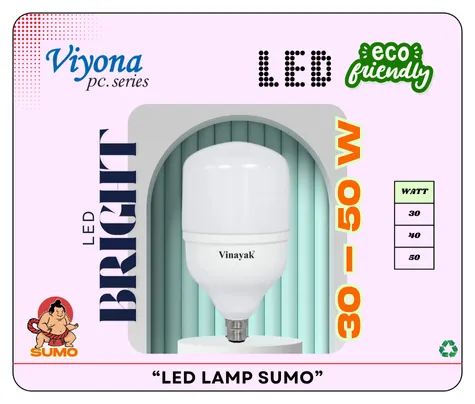
An LED bulb uses its printed wattage, so a 9 W LED lamp running for 5 hours a day uses 0.045 units a day, about 1.35 units a month, and even six of them in a flat come to around 8 units a month, which is why lighting is one of the smallest lines on an LED-lit home’s bill.
Our LED lamps: units a month at 5 hours a day
Watts and MRPs from our LED price list (1 January 2026); units = W × 5 h × 30 days ÷ 1000. Bars to scale against 7.5 units.
The large Sumo lamps are on our LED lamp Sumo page. A 0.5 W LED night lamp (1061, ₹40 MRP) left on 10 hours a night uses about 0.15 units a month.
A typical 2BHK day in units
A typical 2BHK with one inverter AC running four hours, three ceiling fans, a double door fridge, a geyser, induction cooking, a washing machine and LED lighting uses about 12 units on a warm day in our worked example, or roughly 359 units over a 30-day month, with the AC alone about a third of it.
Daily units of a typical 2BHK day (worked example)
Typical wattages with our example hours; about 11.96 units in total. Bars to scale against 4 units. Your plates, labels and habits will give different numbers.
To turn this into a bill, multiply by the days in your billing period and apply your board’s slabs; our how to calculate electricity bill guide prices this same 359-unit month line by line with an example tariff.
Which appliances need a 16A socket or their own MCB?
Appliances that heat, cool or drive a large motor, such as the geyser, AC, induction cooktop, microwave, iron, room heater, washing machine and water pump, typically need a 16A socket or a fixed connection, and the geyser and each AC are commonly given a circuit and MCB of their own in the distribution board.
6A socket Chargers, lamps, TV, router, laptop, table fan. 16A socket Iron, microwave, induction, washing machine, heater. Own circuit Geyser, each AC, often the pump. The reasons are in our 6A vs 16A socket guide.
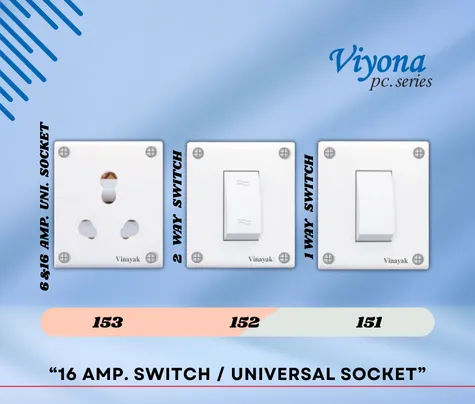
For a 16A point on a conventional board, our VIYONA 16A switch and universal socket range has the 153 6 & 16A universal socket with shutter at ₹90 MRP and the 151 16A one way switch at ₹74. On a KEMPS modular board, the K193 6A & 16AX universal socket is ₹205 in white.
A 16A socket does not make a light-duty circuit safe for a heavy load. The cable and the MCB behind it decide that, and a licensed electrician sizes them.
How to read the BEE star label
The BEE star label, issued under the Bureau of Energy Efficiency’s scheme, rates an appliance from one to five stars against others of the same type and size, and on many appliances it also prints the expected units per year, which is the number to compare and to divide by 365 for units a day.
Stars More stars, fewer units for the same job. Same size only A 5-star large fridge can still use more than a 3-star small one. Units per year Printed on labels for fridges, ACs and other appliances, under the test conditions the label states. Label period Star bands are revised from time to time, so the label shows its validity.
For an AC the label also shows an efficiency figure; higher is better. For a ceiling fan, more stars means more air moved per watt. The label turns a showroom choice into arithmetic: units per year × your rate is the running cost.
More ways to cut the units, from LED lighting to standby, are in our guide to saving electricity at home.
FAQs
How many units does an AC consume per hour?
AC 1 ghante mein kitni unit khata hai?
Fridge ek din mein kitni unit bijli khata hai?
What is the geyser power consumption per hour?
How many units does a fan consume in a day?
How much electricity does a 1000 W iron use?
Why buyers choose Vinayak Electricals
- Switches, 16A sockets, MCBs, regulators and LED lights made at our own works in Mumbai since 1995.
- VIYONA 1000 W dry irons, codes 601 to 605, from ₹920 to ₹1,480 MRP.
- LED lamps from 9 W (₹70) to 50 W, plus a 0.5 W night lamp at ₹40.
- VIYONA 10 kA MCBs from ₹145 MRP for dedicated geyser and AC circuits.
- 16A and universal sockets across KEMPS, VIZA and VIYONA.
- Sold through dealers across India, in full boxes; MRPs published openly.
Sockets and MCBs for heavy appliances
Find 16A sockets, switches and MCBs for your geyser, AC and kitchen points, with codes and MRPs, then order through a dealer.
Browse products