LED Bulb vs Tube Light: Which Uses Less Electricity?
LED bulb vs tube light is a question of shape and watts. A bulb lights a room from one point; a tube spreads light along a line. For the same watts both use the same units, and both beat an old fluorescent tube with a choke. Below: watts, light spread, units per month, which light suits which room, how many lights a room needs, and what our LED bulbs and tube fittings cost per watt at MRP.
Key takeaways
- Same watts, same units — an LED bulb and an LED tube of equal wattage use the same electricity.
- Old tube with choke — typically about 50W in all for a 40W tube; a 20W LED tube draws 20W.
- Bulb for bedrooms, bathrooms, balconies; tube for kitchens, corridors and shops.
- Cheapest per watt — our 9W LED bulb (1065, ₹70) at ₹7.78/W and 20W T5 tube (1059, ₹200) at ₹10.00/W.
- ⚠ Watts are not brightness. Compare lumens on the carton; our catalogue gives none for our lamps.
LED bulb vs tube light: the short answer
LED bulb vs tube light comes down to shape, not technology: an LED bulb (a lamp that screws or pins into a holder) sends light out from one point in every direction, while an LED tube light is a long fitting that spreads light evenly along a line. For the same watts both use the same electricity.
The real saving is against the old fluorescent tube light with a choke, and against old filament bulbs. Below we compare the three on watts, light spread, the rooms each suits and units per month, then price them per watt using our own LED price list. Watts are the power a light draws from the supply; units on your bill are kilowatt-hours (kWh), and one unit is 1,000 watts running for one hour.
We make LED lamps, LED tube fittings and bullet LEDs at our works in Marol, Andheri East, Mumbai, and every code and MRP below is from our January 2026 price list.
LED bulb vs tube light comparison: what is actually different?
An LED bulb and an LED tube light differ in how they fit and how they spread light: a bulb needs a separate holder and lights a room from one point, while a tube light is usually a complete batten fitting fixed to a wall or ceiling that throws an even band of light along its length.
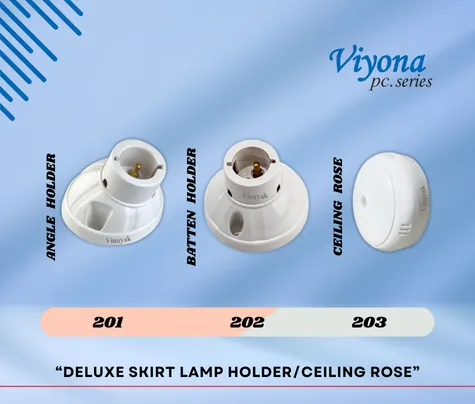
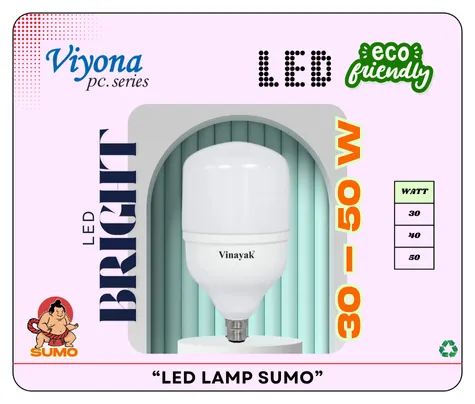
LED bulb The industry calls it a lamp. It fits a batten holder or angle holder on the ceiling or wall; our VIYONA batten holder 202 is ₹26 MRP. Our LED lamps run from 9W (code 1065) to 23W (1069), and the LED Lamp Sumo (1070 series) adds 30W, 40W and 50W.
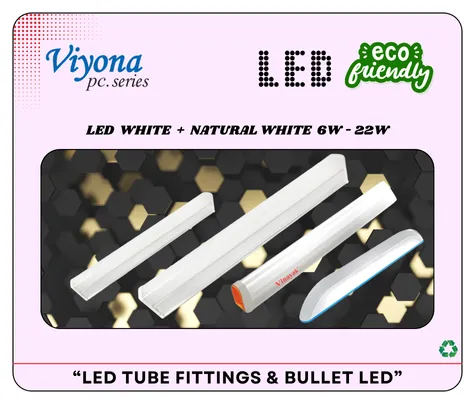
LED tube fitting Body and light in one, fixed straight to the wall and wired to the point. Our LED tube fittings come in 6W, 12W, 20W and 40W, the 12W and 20W as T5 PVC fittings. T5 and T8 describe the tube’s diameter in eighths of an inch.
Old fluorescent tube A glass tube in a holder pair, with a choke (ballast) and usually a starter. It still lights many Indian kitchens and shops.
Our catalogue does not print lumen figures for our lamps or tube fittings, so on this page we compare watts and MRPs only, never brightness. The lumens printed on any carton you buy are the brightness figure.
| LED bulb (lamp) | LED tube fitting | Old fluorescent tube | |
|---|---|---|---|
| How it fits | Into a batten or angle holder | Complete fitting on the wall or ceiling | Tube in a batten with choke and starter |
| Light spread | From one point, all round | Even, along its length | Even, along its length |
| Choke or starter | No | No | Yes |
| Typical power for a room light | 9W to 15W | 12W to 20W | About 50W with a copper choke (40W tube) |
| Units a month at 5 h a day | 1.35 (9W) | 3 (20W) | About 7.5 |
| Best for | Bedroom, bathroom, balcony, stairs | Kitchen, corridor, shop, garage | Replace when it fails |
| Our range | 9W to 50W, ₹70 to ₹720 | 6W to 40W, ₹160 to ₹600 | We do not make them |
LED bulb or tube light: which consumes more electricity?
Neither an LED bulb nor an LED tube light consumes more because of its shape; the watt rating decides, so a 9W LED bulb uses less than a 20W LED tube and a 20W tube less than a 23W bulb, while an old fluorescent tube with a copper choke clearly consumes more than either of them.
Read the wattage printed on the lamp or fitting. Same watts means same units, whatever the shape. A 20W tube running for one hour draws 20 watt-hours, exactly like a 20W bulb.
What changes is how much light you get for those watts, called efficacy and measured in lumens per watt. That varies from model to model, so compare the lumens on two cartons before deciding one is “brighter”.
The old tube is different. A conventional copper choke turns part of the power into heat, typically adding around 10W to a 36W or 40W tube, so the whole fitting draws about 50W where the tube’s label says 40. An electronic choke wastes much less. The rating plate on the choke gives the real figure for yours.
Quick rule: compare watts on the label. A light with no wattage printed on it is the one to replace first.
Light from one point; 9W to 50W in our range, from ₹70 MRP.
Even light along a line; 6W to 40W, from ₹160 MRP.
Typically about 50W in all for a 40W tube; the first light to replace.
Watts × hours ÷ 1000. A 20W tube for 5 hours a day uses 3 units a month.
LED bulb vs LED tube light power consumption: units per month
An LED bulb or LED tube light uses watts × hours ÷ 1,000 units: a 9W LED bulb on for 5 hours a day uses 1.35 units a month, a 20W LED tube 3 units, and an old 40W fluorescent tube with a copper choke, drawing about 50W in all, around 7.5 units.
Units per month at 5 hours a day, 30 days
Calculated as watts × 5 × 30 ÷ 1000. LED wattages are from our catalogue; the old tube (about 50W with its choke) and the 60W filament bulb are typical figures, not measurements. Bars to scale, rounded to the nearest 5%.
Turn units into rupees with your own tariff. At an example rate of ₹8 a unit, the 9W bulb costs about ₹10.80 a month, the 20W tube ₹24 and the old choke tube about ₹60. Tariffs differ by state and by slab, so use the rates printed on your bill; our how to calculate electricity bill guide shows how.
Swapping one old choke tube for a 20W LED tube saves about 4.5 units a month at 5 hours a day. Across four tubes in a home or a shop, that is 18 units a month.
How does the light spread from a bulb and a tube?
An LED bulb spreads light from one point outwards in a rough ball, so it lights the middle of a room well and the corners less, while a tube light spreads light along its whole length, so it gives an even band over a long counter, a corridor or a shelf without dark ends.
How the light spreads: LED bulb vs LED tube light
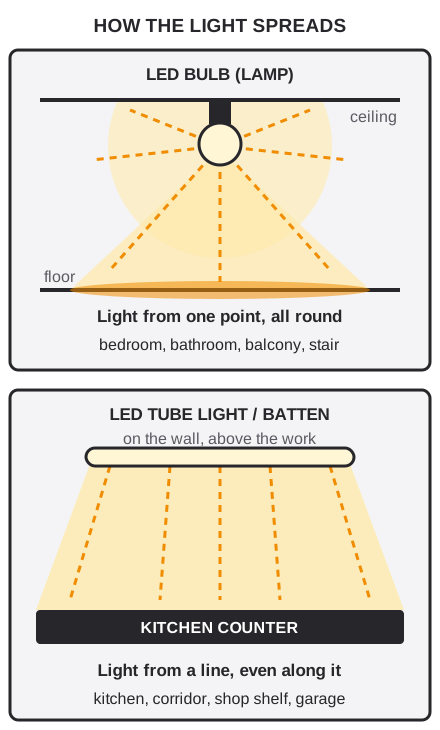
Drawn by us to show the shape of the light only; it is not a lumen or lux measurement of any product. Tap the diagram to open it full size.
That is why a single ceiling bulb suits a small square room, and a wall tube suits a long narrow one. A tube fixed above the work, not behind you, keeps your own shadow off the chopping board or the cash counter.
Glare A bare bulb at eye level, on a staircase wall or a bathroom mirror, can dazzle. A bulb on the ceiling or a tube above head height avoids it.
LED bulb or tube light: which is better for each room?
An LED bulb is usually better for bedrooms, bathrooms, balconies and staircases, where one point of light is enough, while an LED tube light is usually better for kitchens, corridors, garages and shop shelves, where a long surface needs even light; many homes use both, sometimes in the same room.
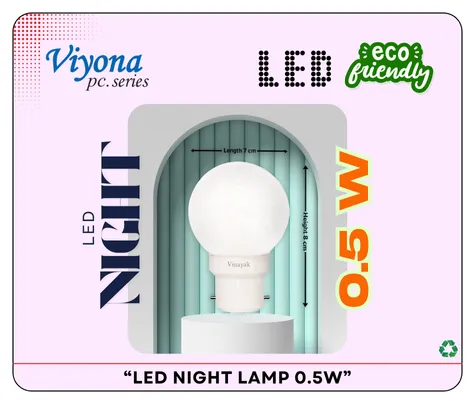
Bedroom A ceiling bulb or a panel for general light, plus a 0.5W night lamp; our LED night lamp 1061 is ₹40 MRP.
Kitchen A tube over the counter for work, and a bulb or panel on the ceiling if the kitchen is large.
Bathroom A bulb in a holder away from the shower and taps. Fittings in a wet area are for the electrician to place.
Corridor and passage A tube along the length, or bulbs spaced along it.
Shop Tubes over shelves and the counter, so labels and cash are evenly lit.
Balcony and gate A bulb in a covered holder, or a small flood light; our LED flood light and street light price guide lists the outdoor wattages.
A false ceiling changes the answer: panels and downlights take over from bulbs there, as our panel light vs downlight guide explains.
Old tube light with choke vs LED tube: is it worth changing?
Yes, replacing an old fluorescent tube light with a choke is usually worth it: an LED tube fitting typically draws far less than the old tube and its choke, needs no choke or starter, starts instantly without flicker, and avoids the small amount of mercury inside every fluorescent tube, which makes a broken tube a cleanup job.
Choke loss A copper choke warms up because it is wasting power. Starter The small cylinder that blinks the tube on wears out and causes the familiar flicker. Hum An old choke often buzzes.
Whole fitting The simplest change is to remove the old fitting and fix an LED tube fitting in its place. Tube only Fitting an LED tube into an old fluorescent batten needs the choke and starter dealt with as the LED tube’s maker instructs; get an electrician to do it.
Switch off the MCB for that circuit before removing any fitting. A light switch alone may break the neutral instead of the phase. A neon line tester shows that a phase is present, but it never proves a wire dead.
Wrap a dead fluorescent tube and hand it in as e-waste; do not break it into the household bin.
Watts, lumens and lux: what do the numbers mean?
Watts measure the electricity a light draws, lumens measure how much light it gives out, and lux measures how much of that light lands on a surface, one lux being one lumen spread over one square metre; you pay for watts, but you see lumens and lux.
Watts (W) Decide the bill. Lumens (lm) Decide brightness; the figure is printed on many lamp cartons. Lux (lx) Lumens ÷ area in square metres, measured with a lux meter at the table or floor.
The arithmetic for a hypothetical lamp printed 900 lm in a 3 m × 3.7 m bedroom (about 11 square metres, roughly 10 by 12 feet): 900 ÷ 11 = about 80 lux if every lumen reached the floor. Walls, the ceiling and the lampshade absorb some, so the real figure is lower.
Colour Warm white and cool white are colours, not brightness. Our bullet LEDs are listed as white or natural white; for the rest of our range, check the carton.
For more on reading a carton by lumens rather than watts, see our saving electricity at home guide.
How many lights in a room?
Most rooms need one general light plus one task light for each place where you read, cook, work or dress, and a night lamp in bedrooms; the exact count and wattage depend on the room’s size, ceiling height and wall colour, so treat any rule of thumb as a starting point only.
Count by job, not by square feet. General One ceiling light, or two in a long room. Task A tube over the kitchen counter, a light at the study table, a light at the mirror. Night A 0.5W night lamp. Accent Optional, for a wall or a shelf.
A typical 10 × 12 ft bedroom ends up with one ceiling light, one bedside or dressing light and one night lamp. A kitchen gets one tube per counter.
Plan points first Each light needs a switch and a wired point; adding one after plastering costs far more. Decide the count before the electrician chases the walls.
Brighter is not always better: over-lighting a small room only adds units. Choose by the lumens the room needs, then the lowest wattage that gives them.
LED bulb vs tube light price: what does each cost per watt?
In our range the 9W LED bulb is the cheapest light per watt at about ₹7.78 (₹70 MRP), followed by the 20W T5 tube fitting at ₹10.00 (₹200), while small tube fittings and bullet LEDs cost the most per watt, up to about ₹35.56 for the 9W bullet LED.
MRP per watt of rated power, a selection from our LED range
MRP divided by the wattage in the product name, for example ₹70 ÷ 9 = ₹7.78 and ₹200 ÷ 20 = ₹10.00. MRPs from our January 2026 LED price list. Bars to scale with ₹35.56 as the full bar, rounded to the nearest 5%. Watts are power drawn, not light given.
Remember a bulb also needs a holder, from ₹26 in our VIYONA range, while a tube fitting is complete. Even with a ₹26 batten holder added, the 9W bulb is ₹96 against ₹200 for the 20W tube.
Per watt is not light per rupee: without lumen figures this compares cost against power only. The same sum for panels and downlights is in our panel light vs downlight guide.
Bullet LED vs LED bulb vs tube: where does each sit in our range?
In our catalogue, LED bulbs (lamps) cover 9W to 50W, LED tube fittings cover 6W to 40W, and bullet LEDs cover 9W to 22W in white or natural white, listed alongside the tube fittings at higher MRPs per watt than our plain LED bulbs.
LED bulbs 1065 9W ₹70, 1066 12W ₹145, 1067 15W ₹212, 1068 18W ₹268, 1069 23W ₹410, 1070 Sumo 30W ₹480, 1070A Sumo 40W ₹600 and 1070B Sumo 50W ₹720.
Tube fittings 1051 6W ₹160, 1058 12W ₹180, 1059 20W ₹200 and 1060 40W ₹600, the 12W and 20W as PVC T5 fittings.
Bullet LEDs 1054 9W white ₹320, 1055 12W natural white ₹360, 1056 15W white ₹510 and 1057 22W natural white ₹560.
Our catalogue prints IS 16102 (Part 1) : 2012 and BIS registration R-71026514 in the LED lamp section. Our catalogue does not describe the bullet LED’s fitting or cap, so ask your dealer which holder or mounting a code needs before you order.
What should you check before buying an LED bulb or tube light?
Before buying an LED bulb or tube light, check the wattage and lumens on the carton, the BIS registration number, the cap type against your holder, the colour (warm or cool white), the length of a tube against the space, and the MRP printed on the pack; then fit it with the circuit switched off.
R-number An LED lamp carries a BIS registration number you can verify. Lumens Compare light, then watts. Cap Bayonet (pin type) or screw: match your holder. Length Measure the wall before buying a tube fitting. MRP Compare a quote with the printed MRP.
Old holder? A brown, cracked or loose holder can heat up; replace it with the bulb. Wet areas Bathroom and balcony points are for the electrician to place and seal.
Changing a bulb is a homeowner job: switch off first and hold the bulb by its body, not the cap. Fixing a new tube fitting or holder means working on the wiring, so switch off the MCB and leave it to a licensed electrician.
For the rest of the house, our home electrical maintenance checklist covers holders, switches and the board.
FAQs
LED bulb or tube light: which consumes more electricity?
LED bulb ya tube light, kaun zyada bijli khata hai?
LED bulb or tube light: which is better?
Tube light ki choke kitni bijli leti hai?
Ek kamre mein kitni light lagani chahiye?
What is the price of your LED bulbs and tube lights?
Why buyers choose Vinayak Electricals
- LED bulbs, tube fittings and bullet LEDs made at our works in Marol, Andheri East, Mumbai, since 1995.
- LED lamps listed in our catalogue against IS 16102 (Part 1) : 2012, BIS registration R-71026514.
- LED bulbs from 9W to 50W and tube fittings from 6W to 40W, with a 0.5W night lamp.
- VIYONA batten and angle holders from ₹26 MRP from the same catalogue.
- MRPs published openly; sold in full boxes through 500+ dealers with delivery across India.
- ISO 9001:2015 certified; 15-day returns in the same condition.
LED bulbs and tube fittings by code
See our LED range with wattages and MRPs, then order through a dealer or call us.
View LED lights