LED Bulkhead Lights: Where They Work and Which Wattage to Fit
A bulkhead light is a sturdy, sealed-looking fitting that mounts flat on a wall or ceiling and takes knocks, damp and dust better than an open bulb holder, which is why LED bulkhead lights are the usual choice for stairs, corridors, utility areas and covered outdoor spots. Below we cover where a bulkhead suits and where it does not, bathroom and outdoor use, 12W vs 20W, the questions to ask about IP rating, and the two PVC bulkheads we make in Mumbai.
Key takeaways
- What it is — a compact, enclosed light that fixes flat to a wall or ceiling, built for knocks and damp.
- Where it suits — staircases, corridors, utility rooms, parking, covered balconies and service areas.
- 12W vs 20W — 12W for a landing, passage or small utility room; 20W for a wider stair hall, parking bay or store.
- Wet spots — ask for the IP rating against the code before fitting one where rain or spray reaches it; our catalogue does not print one.
- Ours — 1046 12W PVC LED bulkhead at ₹330 MRP and 1047 20W at ₹480 MRP, pack of 10.
What is a bulkhead light?
A bulkhead light is a compact, fully enclosed light fitting that screws flat onto a wall or ceiling, with a tough body and a diffuser cover that keeps fingers, insects and dust away from the light source. The name comes from ships, where such fittings were fixed to the bulkheads, the walls between compartments, and had to survive water and knocks.
An LED bulkhead light has the LEDs and their driver built in, so there is no bulb to change. It is wired like any other light point: phase through the switch, neutral, and earth where the body or the instructions call for it. Because the fitting is enclosed and low-profile, it suits places where a bare bulb would be knocked, splashed or covered in dust within months.
Bulkheads are not decorative lights. Their job is reliable, glare-free light in working and passing spaces: the staircase of a building, a corridor, a meter room, a covered parking bay, a store or a service balcony. We make two LED bulkheads in PVC bodies, a 12W and a 20W, at our works in Marol, Andheri East, Mumbai.
Where is a bulkhead light used?
A bulkhead light is used wherever a light must survive knocks, dust, insects or damp better than an open fitting, which in homes and buildings means staircases, landings, corridors, utility and wash areas, meter rooms, stores, covered parking and covered balconies or terraces.
Common spots, by building type:
Society staircase Lift lobby Meter room Covered parking Utility and wash area Store and godown Service balcony Shop back room
What these have in common is that people pass through rather than sit, the light is often on for long hours, and nobody wants to climb a ladder to change it. A low-wattage LED bulkhead suits that well. For lights that stay on all night, the running cost is small; our appliance power consumption chart shows how to work out units.
For a living room or bedroom, a bulkhead is the wrong look. Use a panel or surface light there, as our panel light vs downlight guide explains.
In a society, standardising on one or two bulkhead wattages for every stair and passage keeps spares simple: one box covers the whole building.
| Bulkhead light | Tube light fitting | Surface light | |
|---|---|---|---|
| Body | Enclosed, flat mount | Long batten | Round or square ceiling disc |
| Best for | Stairs, passages, damp spots | Long walls, shelves | Room ceilings without false ceiling |
| Copes with knocks and damp | Better | Moderate | Moderate |
| Our 20W MRP | ₹480 (1047) | ₹200 (1059) | ₹600 (1008) |
| Our smallest | 12W at ₹330 (1046) | 6W at ₹160 (1051) | 6W concealed at ₹160 (1006) |
Bulkhead light vs tube light vs surface light: which to choose?
Choose a bulkhead light where the fitting will be knocked, dusty or damp and you want a compact enclosed body, a tube light where you need long, even light along a wall or shelf, and a surface light where you want a neat ceiling light for a room without a false ceiling.
The three overlap in wattage. A 20W bulkhead, a 20W T5 tube fitting and a 20W surface light use the same power. What differs is the shape of the light and how well the body copes with the place it is fitted.
A tube fitting is the cheapest per watt and spreads light along its length, which suits a long passage or a shelf wall; our tube light for home guide covers lengths and watts. A surface light looks finished on a bedroom or hall ceiling. A bulkhead is the one to pick where looks matter less than a closed body, such as a stair landing or a wash area.
For a long corridor, two bulkheads spaced along it often light better than one bigger fitting in the middle. Even light matters more than a bright spot.
The classic bulkhead spot: on for long hours, out of reach, easy to knock.
Our catalogue prints none; get the figure against the code for wet spots.
12W for a landing or utility corner; 20W for a wider hall or parking bay.
Test the wires dead before fitting; leave new points to an electrician.
Is a bulkhead light good for a bathroom?
A bulkhead light can be a good bathroom light because its enclosed body keeps steam and splashes away from the LEDs better than an open holder, but only if the specific fitting is rated for damp places and mounted away from direct spray, so check the IP rating against the code before you fit one.
A bathroom is a damp place, not just a dark one. Steam settles inside fittings, and water from a shower or a hand spray can reach the ceiling near the wet area. For lights in or near the wet zone, it is common practice to use a fitting with a stated IP rating; our IP rating for lights guide explains what IPX4 and IP65 mean.
No IP rating printed: our catalogue states none for our 12W and 20W PVC bulkheads, so we do not claim one here. Ask us or your dealer for the rating against the code before you fit it somewhere that gets wet. On the ceiling of a dry area of the bathroom, away from the shower, an enclosed light is a sensible choice.
The switch belongs outside the wet area, and the circuit should be protected as our bathroom electrical points guide sets out.
Never fit a light directly in the path of a shower spray unless it is rated for it. Water inside a fitting can make its body live.
Can a bulkhead light be used outdoors?
A bulkhead light can be used outdoors in a covered spot such as a porch ceiling, a covered balcony or a parking shed, but a fitting that will take direct rain needs a stated IP rating suited to it, and you should get that rating against the exact code before buying.
Covered outdoor spots are where bulkheads are most often fitted: porch covered balcony parking shed compound passage. The enclosed body keeps insects out, which matters on a light that stays on at night.
Open to rain is a different case. Driving monsoon rain gets into fittings that are only splash-safe, so for an open wall or terrace ask for the IP figure first. If our dealer cannot give you a rating for the spot you have in mind, look at a fitting that states one. For the wider choice of gate, wall and compound lights, see outdoor lights for home; for balcony points and switching, see balcony electrical points.
Mount the fitting the right way up as shown on the box, with the cable entering from below where possible, so water runs off instead of following the cable in.
A sealed fitting is only as sealed as its cable entry. A gap where the wire enters undoes a good body.
12W vs 20W bulkhead light: which wattage?
A 12W bulkhead light suits a small landing, a narrow passage, a meter room or a utility corner, while a 20W bulkhead suits a wider stair hall, a parking bay, a store room or a long corridor with one fitting, and if you are unsure, two 12W fittings spaced apart usually light a space more evenly than one 20W.
Our PVC LED bulkhead lights by MRP
MRPs from our current printed catalogue, bars to scale with ₹480 as the full bar. Pack of 10 for both.
As a starting point, common practice is 12W for up to a small landing and 20W where the space is wider or the ceiling higher. Light falls off with height, so a high stairwell may need the bigger fitting even in a narrow space.
For a proper count by room size and lux, use our how many lights in a room guide.
PVC vs metal bulkhead light: does the body matter?
The body matters because it decides how the fitting copes with knocks, corrosion and heat: a PVC body does not rust, is light and does not conduct electricity, which suits damp and coastal places, while a metal or cast aluminium body is tougher against impact and spreads heat, which suits rough industrial use.
Both of our bulkheads have PVC bodies, as the catalogue names them. In a coastal city like Mumbai, where salt air rusts painted steel, no rust is a real advantage for a fitting on a balcony or in a stairwell open to the sea breeze. PVC is also non-conducting, so a damaged cable inside does not make the body live the way it can with an unearthed metal body.
Where PVC is weaker is in heavy impact and sustained heat. In a warehouse with forklifts or a workshop where things get thrown about, a metal-bodied or guarded fitting is the better choice. In a home or society, a PVC bulkhead fixed at a sensible height is well suited.
Keep any light fitting clear of a geyser vent or kitchen exhaust outlet. Constant hot air ages plastic and drivers alike.
How do you install a bulkhead light?
To install a bulkhead light, switch off the MCB and test the wires dead, open the cover, fix the base to the wall or ceiling with screws through its mounting holes, bring the cable in through the entry, connect phase from the switch, neutral and earth where provided, then close the cover and restore power.
Step by step:
1. MCB off, test dead 2. Mark and drill 3. Cable through the entry 4. Connect L, N and earth 5. Fix base, close cover 6. MCB on, test
The switch must break the phase, not the neutral, or the fitting stays live when switched off; our LED glowing when switched off guide shows what that looks like. Keep joints inside the fitting’s terminal block or a proper junction box, never taped and left outside. For outdoor and damp spots, seal the cable entry and point it downward.
A like-for-like swap on an existing point is simple. New points, a fresh cable run or work in a wet area are jobs for a licensed electrician.
Switch off the MCB and confirm the circuit is dead with a tester before touching any wire. If you are unsure, call a licensed electrician.
Bulkhead lights for a society staircase: how many?
A society staircase commonly gets one bulkhead light per landing, with mid-landings on taller floors, so a ground-plus-seven building often needs fifteen or so fittings for the stairs alone, which makes wattage and running hours the biggest cost decisions.
Stair lights often run all night. At 12W per fitting, fifteen fittings on for 12 hours use about 2.2 units a night, worked out as 15 × 12W × 12h ÷ 1,000. At 20W each the same building uses 3.6 units. Over a year that difference is visible on the common-area bill; our electricity bill guide shows the formula.
Units per night for 15 stair lights on for 12 hours
Our own arithmetic: fittings × watts × hours ÷ 1,000. Not a measurement; actual use depends on timers and hours.
A timer or sensor on the stair circuit cuts hours further. Keep the stair lights on their own MCB so a fault in one flat does not darken the escape route.
Bulkhead light price: what does each cost?
Our LED bulkhead lights cost ₹330 MRP for the 12W PVC model 1046 and ₹480 MRP for the 20W PVC model 1047, both sold in boxes of 10, which works out to about ₹27.50 per watt for the 12W and ₹24 per watt for the 20W.
VIYONA LED 1046 is a 12W PVC LED bulkhead light with an MRP of ₹330. Its bigger sibling, the 1047 20W, ₹480, costs ₹150 more for 8W more. Per watt, the bigger fitting is a little cheaper, but only buy the 20W where the space needs it.
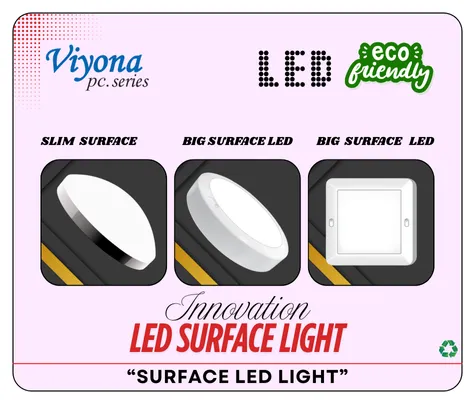
For comparison within our own range: a 20W T5 tube fitting at ₹200 is cheaper per watt and suits a long wall, and a 20W surface light at ₹600 costs more but looks finished on a room ceiling; see our surface LED light page. The bulkhead sits between them, and is the one built for damp and knocks.
Buying for a whole building? A box of 10 bulkheads and a few spares bought together keeps every landing on the same fitting and colour.
FAQs
What is a bulkhead light used for?
Can I use a bulkhead light in the bathroom?
Are bulkhead lights waterproof?
Which is better, a 12W or 20W bulkhead light?
What is the price of an LED bulkhead light?
Does a bulkhead light need an earth wire?
Why buyers choose Vinayak Electricals
- 12W and 20W PVC LED bulkhead lights made at our works in Marol, Andheri East, Mumbai.
- Bulkheads from ₹330 MRP, sold in boxes of 10 for whole-building jobs.
- Tube fittings, surface lights and panels from the same LED catalogue for the rest of the building.
- Spare LED drivers for our panels, street lights and flood lights, listed to IS 15885.
- MRPs published openly; sold through 500+ dealers with delivery across India.
- Manufacturing in Mumbai since 1995; ISO 9001:2015 certified.
Bulkheads, tubes and surface lights
See our LED range with codes and MRPs, then order through a dealer near you or call us for a building quote.
View our LED lights