Warm White vs Cool White vs Natural White, Room by Room
Warm white vs cool white is a choice of light colour, not brightness: warm white, around 2700K to 3000K, is the soft yellowish light of a cosy room, while cool white, around 6000K to 6500K, is the crisp bluish light of an office or a shop, and natural white, around 4000K, sits between them. Below we explain what the kelvin numbers mean, which colour suits a bedroom, kitchen, bathroom, study and living room, whether colour changes the bill, and which of the LED lights we make in Mumbai state a colour in our catalogue.
Key takeaways
- Warm white — about 2700K to 3000K; yellowish and relaxed. Bedrooms, living rooms, dining.
- Natural white — about 4000K; neutral and clear. Kitchens, bathrooms, study, all-rounder.
- Cool white / daylight — about 6000K to 6500K; bluish and crisp. Workshops, shops, garages, task areas.
- Same watts, same bill — colour does not change the units; lumens decide brightness.
- Our bullet LEDs — listed as white or natural white, ₹320 to ₹560 MRP; check the carton for the rest of our range.
Warm white vs cool white: the short answer
Every white LED light has a colour, measured in kelvin (K) and printed on the carton. Low numbers look warm and yellowish, like an old filament bulb or the evening sun. High numbers look cool and bluish, like daylight at noon. Natural white, also called neutral white, sits in the middle.
None of them is better in general. Warm white makes a room feel relaxed and is kinder to skin tones and wood. Cool white makes a room feel alert and shows colours and small print crisply. Natural white is the safe all-rounder when one colour has to do everything.
The colour does not change how much electricity a light uses: a 9W lamp draws 9W whether it is warm or cool. Brightness is a separate number, the lumens, which our lumens to watts guide explains.
We make LED lamps, tube fittings, panels, downlights and bullet LEDs at our works in Marol, Andheri East, Mumbai. Our catalogue states a colour only for our bullet LEDs, so this guide is general advice, with our products named where the catalogue supports it.
What is colour temperature in kelvin?
Colour temperature is a number in kelvin that describes how warm or cool a white light looks, with lower values such as 2700K looking warm and yellowish and higher values such as 6500K looking cool and bluish; it describes the colour of the light only and says nothing about how bright it is or how much power it uses.
Common LED colour temperatures, in kelvin
Typical values printed on LED cartons; general practice, not a test of any product. Bars to scale with 6500K as the full bar.
The names on cartons vary. Warm white usually means 2700K to 3000K. Natural, neutral or cool white can mean about 4000K. Daylight or cool daylight usually means 5700K to 6500K.
Because the words are used loosely, trust the number over the name. Two lamps both called “cool white” can be 4000K and 6500K.
| Warm white | Natural white | Cool white / daylight | |
|---|---|---|---|
| Typical kelvin | 2700K to 3000K | About 4000K | 5700K to 6500K |
| Looks | Soft, yellowish | Clean, neutral | Crisp, bluish |
| Feels | Relaxed, cosy | Everyday, balanced | Alert, office-like |
| Best rooms | Bedroom, living, dining, pooja | Kitchen, bathroom, study | Garage, workshop, shop |
| Electricity at same watts | Same | Same | Same |
Warm white vs cool white vs natural white: what is the difference?
Warm white light, around 2700K to 3000K, looks soft and yellow and makes a room feel relaxed; natural white, around 4000K, looks clean and neutral without a strong tint; and cool white or daylight, around 6000K to 6500K, looks bright, crisp and slightly blue, which suits work areas but can feel harsh in a bedroom.
How each one changes a room:
Warm white Wood, fabrics and skin look warmer. Good for relaxing. Walls painted cream or beige look richer.
Natural white Colours look closest to how they are. Good for everyday living and rooms that do several jobs.
Cool white Whites look whiter and edges sharper. Good for detail and tasks; in a living room it can feel like an office.
Many Indian homes have grown up with cool white tube lights everywhere, so warm white can look dim at first. It is not dimmer; it is a different colour at the same lumens.
Not sure? Buy one lamp of each colour you are considering and try them in the room in the evening before buying a box.
About 3000K. Relaxed light for bedrooms and living rooms.
About 4000K. The safe all-rounder for kitchens and study.
About 6500K. Crisp task light for workshops and shops.
Colour never changes the bill; watts do.
3000K vs 4000K vs 6500K: which should you choose?
Choose 3000K for bedrooms, living rooms and dining areas where you want to relax, 4000K for kitchens, bathrooms, study corners and any room that has to do several jobs, and 6500K for garages, workshops, shops and task areas where seeing detail matters more than mood.
A simple rule for a whole flat: 3000K where you rest, 4000K where you work at home, 6500K where you work hard. If you want one colour everywhere to keep spares simple, 4000K is the safest single choice.
Ceiling height and wall colour shift the result. A low ceiling and dark walls make 6500K feel harsh and 3000K feel gloomy; a bright white room makes either colour feel lighter.
Panels and downlights come in the same range of colours; whether a panel or a downlight suits the room is in our panel light vs downlight guide.
One colour per room. Mixing 3000K and 6500K lamps in the same ceiling makes the room look patchy and the warm lamp look dirty.
Which light colour is best for a bedroom?
Warm white, around 2700K to 3000K, is usually the best light colour for a bedroom because it makes the room feel calm in the evening, with natural white around 4000K a good choice for a dressing area or a study desk inside the bedroom, and a dim night lamp for late at night.
A bedroom does two jobs, so many homes light it in two colours from two fittings: warm white for the main ceiling light used in the evening, and natural white at the mirror or wardrobe where you dress and need colours to look right.
Keep the bright light out of the eyeline from the pillow. A tube on the wall opposite the bed is the classic mistake; our which tube light is best for home guide covers placement.
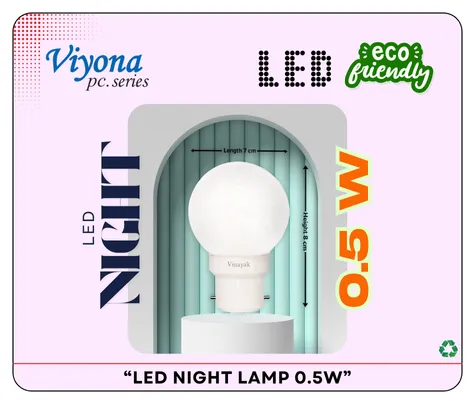
For the night, a 0.5W night lamp does the job. Our LED night lamp 1061 is ₹40 MRP; our night lamp guide covers where to put one.
Which light is best for kitchen, bathroom and study?
Natural white, around 4000K, is usually best for a kitchen, bathroom and study because it shows colours and detail accurately without the harshness of cool daylight, while 6500K suits anyone who prefers a very bright, crisp work light over a counter or a desk, and warm white is usually too soft for these rooms.
Kitchen Natural or cool white over the counter, so you can see whether food is cooked and whether the knife is where you think. Our guide to kitchen electrical points covers where the lights go.
Bathroom Natural white at the mirror shows skin tones honestly for shaving and make-up. Lights in a wet area are for the electrician to place.
Study Natural white for reading and screens, with the light from the side opposite your writing hand. Our guide on which light is best for study goes into lamps and placement.
Avoid warm white alone in these rooms: it can make food, skin and print look slightly yellow.
Which light colour suits the living room, dining and pooja room?
Warm white, around 3000K, usually suits a living room, dining area and pooja room because it flatters skin, wood, brass and fabrics and makes the space feel welcoming, with natural white added on a separate switch where the same room is also used for reading or homework.
Living room Warm white for the main light, natural white for a reading corner. If the family watches TV here, keep bright lights off the screen wall.
Dining A warm pendant over the table makes food look good; our ceiling rose guide covers how a pendant hangs.
Pooja room Warm white suits brass lamps, flowers and idols. A small spot of warm light on the mandir is enough; the room does not need a bright tube.
Two switches, two colours in one room is cheap at the wiring stage and expensive later. Our house electrical layout plan goes room by room.
Does cool white use more electricity or look brighter?
No, cool white does not use more electricity than warm white: power is set by wattage, so a 9W warm white and a 9W cool white lamp use the same units, though cool white can look a little brighter at the same lumens and some warm models give slightly fewer lumens per watt.
The bill depends only on watts × hours. A 9W lamp on for 5 hours a day uses 1.35 units a month whatever its colour. Our electricity bill guide shows the sum.
Brightness is the lumen figure on the carton. Compare that, not the colour, when deciding whether a lamp is bright enough. Our lumens to watts guide explains how to read it.
The perception difference is real but small: a cooler light often feels brighter at the same lumens because it looks crisper. If a warm room feels too dim, add lumens or a second light rather than switching to a colour you will not enjoy.
Is cool white light bad for sleep or eyes?
Cool white light is not harmful in normal home use, but many people find bright, bluish light late in the evening makes it harder to wind down, which is why warm white is the usual choice for bedrooms and evenings, while for eye comfort glare and flicker matter more than the colour itself.
Practical steps rather than rules: warmer light after dark in rooms where you relax; dim the lights an hour before bed, or switch to a night lamp; and avoid bare bright lamps in your line of sight.
For eye comfort, three things matter more than colour. Glare from a bare lamp at eye level. Flicker from a poor driver, which you can see on a phone camera; our guide on why LED lights flicker covers it. And too little light on the page when reading.
Anyone with a specific eye or sleep condition should ask their doctor; we are lighting makers, not doctors, and this is general practice.
Which of our LED lights state a colour?
Our catalogue states a light colour only for our bullet LEDs, listing the 9W and 15W as white and the 12W and 22W as natural white; for our LED lamps, tube fittings, panels and downlights it gives wattage and MRP but no colour, so check the carton or ask your dealer before ordering.
Our bullet LEDs by stated colour, at MRP
Colour names and MRPs as listed in our current LED price list, bars to scale with ₹560 as the full bar. The catalogue gives no kelvin figure for these.
The VIYONA 1055 is a 12W bullet LED listed as natural white at ₹360 MRP. Our catalogue does not give kelvin figures, so “white” and “natural white” are the names we print, not a K value. See the tube fittings and bullet LED page.
Can you mix warm and cool white, and what is CRI?
You can mix warm and cool white in one home, one colour per room or per zone, but mixing them in the same ceiling usually looks patchy; separately, CRI (colour rendering index) is a 0 to 100 score for how true colours look under a light, and a higher CRI makes food, skin and fabrics look more natural.
Mix by room warm in bedrooms, natural in the kitchen. Mix by zone warm for the living room ceiling, natural at the reading lamp, on separate switches. Do not mix two colours in the same row of downlights or panels.
CRI is printed on some cartons as Ra or CRI. Household LED cartons commonly print 80 or more; higher values show reds and skin tones better, which matters most at a mirror, in a kitchen or a clothes shop. Our catalogue does not list CRI for our lights.
When you replace a lamp, match the K number of the others in the room, not just the wattage. Our best LED light brand guide lists the other carton checks.
FAQs
Which is better, warm white or cool white?
Which light colour is best for a bedroom?
What is natural white light?
Does cool white use more electricity than warm white?
What is the difference between 3000K, 4000K and 6500K?
Which light is best for a kitchen, warm white or cool white?
Why buyers choose Vinayak Electricals
- LED lamps, tube fittings, panels, downlights and bullet LEDs made at our works in Marol, Andheri East, Mumbai.
- Bullet LEDs listed as white or natural white, from ₹320 MRP.
- LED lamps from 9W to 50W and a 0.5W night lamp at ₹40 in the same catalogue.
- Holders, switches and LED lights for a whole room from one supplier.
- MRPs published openly; sold through 500+ dealers with delivery across India.
- Manufacturing in Mumbai since 1995; ISO 9001:2015 certified.
LED lights for every room
See our LED lamps, tube fittings, panels and bullet LEDs with wattages and MRPs, then order through a dealer or call us.
View LED lights